Yayla Tribal Rugs
Yayla means high summer mountain pasture. It is from Turkish but it is known to nomadic and semi-nomadic peoples throughout much of the Middle East and Central Asia. It is where herding people take their animals in the summer months to range freely and live off the green grass that appears when the snow melts.
Yayla was founded by Chris Walter in 1980. driven by a youthful desire to pursue a unique path, beginning his journey by learning regional languages and traveling directly to the areas where the company now operates. Over the decades, Chris immersed himself in every facet of the rug trade—from production and sourcing to wholesale and retail operations, while providing critical training to local artisans.
Yayla was a one person operation in 1980, and started out as mainly a wholesaler. Today Yayla remains primarily a wholesaler, with over 100 accounts throughout the US and Canada and Europe. Yayla also has a retail presence in Cambridge, MA
In 1987 Chris took the modern vegetable dyeing revival, which had germinated in Turkey in the 1980’s and reintroduced it to the Ersari, Tekke, Yomud Turkmen communities from northern Afghanistan who were living as refugees in Pakistan. Working with these communities and other refugee groups from Afghanistan, Yayla greatly diversified its rug lines, which led to its rapid growth in the 1990’s.
Yayla’s objective has always been to create unique and beautiful rugs using all the traditional materials that have been known and used for countless generations. The essence of traditional materials to Yayla means the use of hand carded and hand spun wool and vegetable dyes. These are the materials that were used in all hand woven rugs prior to the industrial revolution which brought in chemical dyes and machine spinning in the late 19th and 20th centuries.
For 35 years, Yayla Tribal Rugs has maintained deep, generational partnerships with Indigenous communities, including the Ersari, Tekke, Yomud Turkmen weavers of Northern Afghanistan. In 1992 Yayla took its experience in vegetable dyeing to Tibetan communities in India and Nepal as well. The company has historically coordinated vital networks across India, Pakistan, Nepal and Afghanistan.
Sales from these hand knotted and hand carded rugs provide a profound positive ripple effect of thriving rug sales, helping Tibetan, Ersari, Tekke, Yomud and other regional communities grow while funding local infrastructure and communal resources. When authentic sales thrive, they combat market undercutting from corporate synthetic replicas and bypass exploitative middlemen, restoring community pride and preserving intellectual property rights.
Rug sales also grant matriarchs independent income to feed their families, purchase medication, and maintain autonomy. Furthermore, the trade sustains vital cultural fabrics, allowing elders to pass down tribal history, oral histories, and intricate regional patterns to the youth. The income from rug production supports basic necessities: food, healthcare, children's education, and literacy programs for these weaving families.
For millions of Indigenous and traditional weavers, the U.S. market is not merely a commercial route; it is a foundational life support system. Because weaving is predominantly a cottage industry operated out of village homes, it serves as the primary financial pillar supplementing fragile agricultural earnings.
Since 1987 Yayla has been directing its efforts and resources toward the expansion of educational opportunities for the weaving communities with which it works in South and Central Asia. Yayla’s annual profits are directed to two nonprofits Barakat and Machik. Barakat is a non-profit working to enhance educational opportunities for weaving families and others in India, Pakistan and Afghanistan.
Machik is an organization which Yayla helped to found and through which they have built and run a primary and middle school in Kham in Eastern Tibet, as well as a range of programs that aim to sustain Tibetan culture throughout the Tibetan plateau. Through Barakat and Machik, Yayla’s primary purpose is to focus on maximizing educational potential and the free expression of cultural identity as well as maintaining a stable environment for all.
Cultural Survival provided a seed grant in 1987 that helped catalyze a decades-long movement of tribal rug revival projects. This initial funding helped social entrepreneur Chris Walter launch a textile project that ultimately funded and inspired the creation of Barakat and Machik.
The Ersari: Market Leaders and Innovators
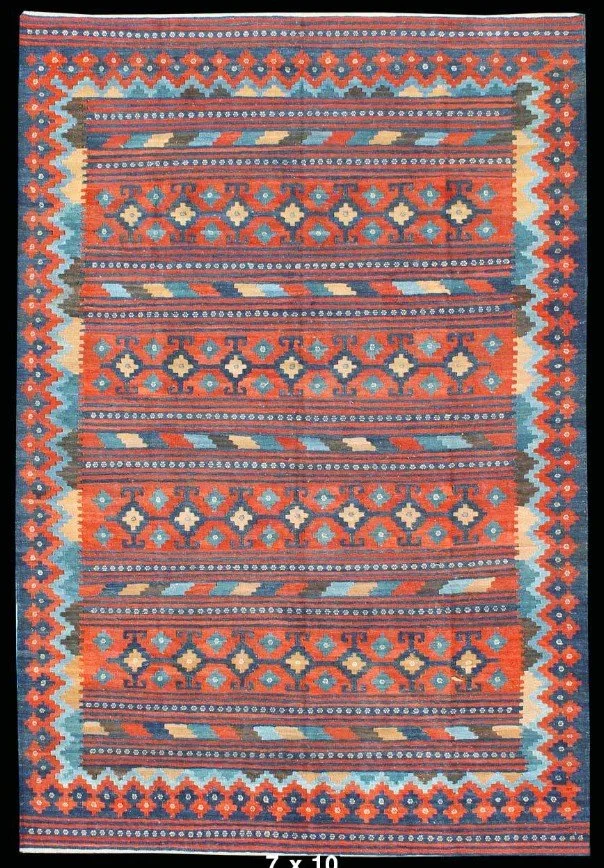
The Ersari stand as the largest and most dominant Turkmen tribe in Afghanistan, heavily concentrated in northern provinces like Faryab, Jowzjan, and Balkh. Structurally divided into four main sub-tribes—the Kara, Bekewul, Gunesh, and Uludepe—they historically organized into small, lineage-based communities called oba. Unlike more isolated groups, the Ersari integrated extensively with settled Uzbek and Persian communities. This interaction accelerated their transition from nomadic pastoralism to an agro-pastoral, market-oriented lifestyle. In the realm of rug production, this adaptability allowed them to scale their weaving operations efficiently. Ersari rugs are highly celebrated for their large, bold geometric guls (tribal crests) and a warm, reddish-brown color palette, blending ancestral heritage with commercial appeal (1).
The Tekke and Yomud: Guardians of Tradition
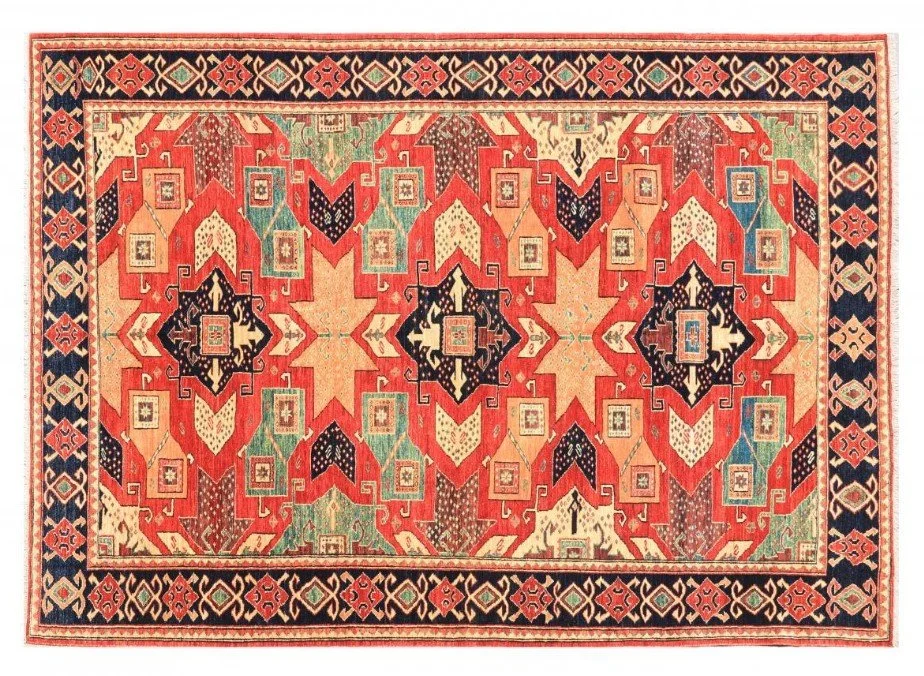
The Tekke and Yomud tribes represent the fiercely independent, traditional heart of Turkmen culture. Historically known as a politically powerful powerhouse, the Tekke vanguard resisted foreign empires in Central Asia, maintaining a cohesive clan structure that balances herding with settled trade. The Yomud are equally renowned for preserving rigid steppe rituals and nomadic lifestyle traditions, with a deep cultural focus on breeding horses, camels, and Karakul sheep. In rug weaving, both tribes maintain strict adherence to ancestral designs. The Tekke are famous for their precise, finely woven, and repetitive guls on deep red fields, which inspired the famous Western "Bukhara" design. The Yomud favor bold, diagonal lattice patterns and anchor-shaped motifs. For both groups, weaving is a meticulous preservation of history, where every hand-tied knot acts as a visual archive of clan lineage (2).
A Communal Lifeline: Tibetan Weaving as Economic and Spiritual Survival
Rooted in centuries-old nomadic and religious practices across the Tibetan Plateau, Tibetan weaving relies on a distinct, continuous loop-cutting technique and hand-spun wool to create durable, highly insulating floor coverings. These textiles historically functioned as sleeping mats, saddle covers, or meditation rugs featuring symbolic Buddhist motifs—such as mandalas, snow lions, and tiger pelts—which embody spiritual protection and societal status. Today, this ancient heritage is kept alive through the Yayla Tribal Rugs Zamling Collection, which preserves these rich spiritual designs and spontaneous village-life folk creations.
Weaving is a vital lifeline for Tibetan communities, functioning as both an economic anchor and a cultural archive across the rugged plateau. For nomadic families, it transforms raw yak and sheep wool into essential shelter, clothing, and trade goods, providing critical income in harsh environments. The craft is deeply communal, traditionally passed down from mothers to daughters, which reinforces social bonds and preserves tribal history through specific regional patterns. Because every knot and color choice reflects Buddhist concepts of mindfulness and cosmic order, weaving serves as a form of moving meditation, ensuring that the spiritual and material survival of these communities remain permanently intertwined.
For more information visit: